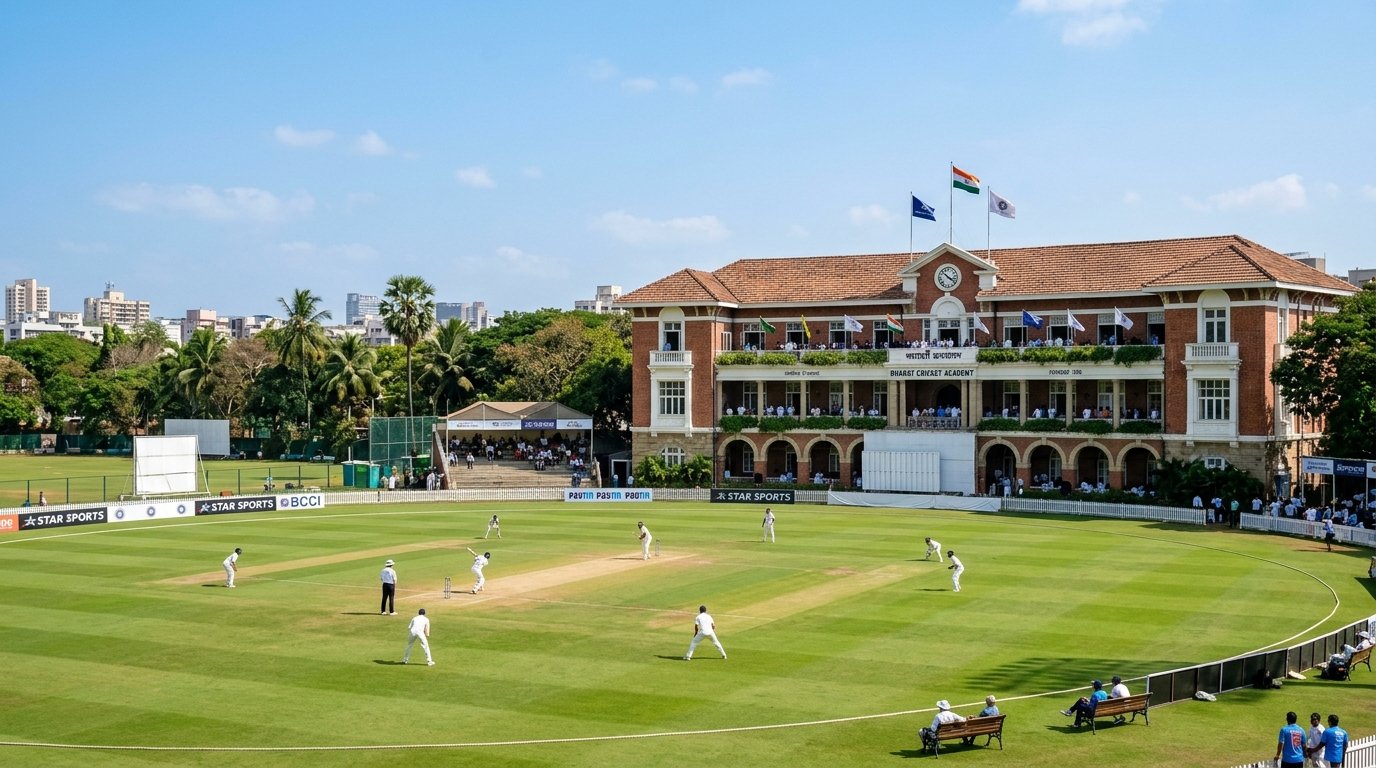
The Founding of the National Cricket Academy (2000)
The National Cricket Academy (NCA) was established in Bengaluru in the year 2000 by the Board of Control for Cricket in India (BCCI). This was a landmark decision in Indian cricket's history, reflecting the BCCI's commitment to creating a structured, scientific approach to player development at the highest level.
Before the NCA was established, India lacked a centralized, dedicated high-performance institution that could specifically focus on the development of talented cricketers who showed potential for international cricket. The NCA was conceived as a response to this gap — a place where promising players could receive world-class training, coaching, sports science support, and medical facilities in a concentrated environment.
Bengaluru was chosen as the location for the NCA given its infrastructure, climate, and central positioning within India. The city's established sporting culture and facilities also made it an ideal home for the country's premier cricket development institution.
"The NCA represented a fundamental shift in how Indian cricket thought about player development — from reactive to proactive, from informal to systematic."
The Early Years: Building a Foundation
In its early years, the NCA focused primarily on providing coaching and training facilities for selected cricketers. The institution attracted coaches with significant first-class and international cricket experience, and worked to develop a structured curriculum for player improvement.
The initial programs concentrated on technical skill development across batting, bowling, wicketkeeping, and fielding. Coaches worked with selected players to refine techniques, address weaknesses, and build on individual strengths. The emphasis was on creating technically sound cricketers who could perform consistently at the highest level.
During this period, the NCA served as a resource for India A teams and emerging players who had shown promise in domestic cricket. It served as a bridge between the domestic circuit and the full India national team — a place where players who were considered near-international level could receive focused attention and development.
The Role of Sports Science: A Major Step Forward
One of the most significant developments in the NCA's history was its increasing integration of sports science into the development process. As Indian cricket evolved and became more competitive at the international level, it became clear that technical coaching alone was insufficient to produce consistently excellent cricketers.
The NCA began incorporating strength and conditioning, physiotherapy, sports medicine, nutritional guidance, and performance analysis into its programs. This multidisciplinary approach recognised that a cricketer's development is not merely about batting or bowling technique, but about the whole athlete — their physical fitness, mental strength, injury prevention, and recovery capacity.
Sports science programs at the NCA helped identify the physical requirements for different positions and playing styles. Fast bowlers, for example, require significant lower body strength, core stability, and cardiovascular endurance. Batsmen need explosive power, hand-eye coordination, and the capacity to bat for extended periods. Fielding standards also improved dramatically as athletic training became more sophisticated.
Injury Rehabilitation: A Critical Function
One of the most practically important functions that the NCA developed over time was injury rehabilitation. Cricket, particularly at the international level, involves a demanding schedule that puts enormous physical strain on players. Injuries are common, and the quality of rehabilitation can determine not just a player's recovery time, but whether they return at the same level as before.
The NCA's medical and physiotherapy team worked with injured cricketers on structured rehabilitation programs, carefully monitoring their return to fitness and gradually reintroducing match-intensity activities. This approach helped ensure that players returned to cricket safely, reducing the risk of re-injury and maximising their long-term performance.
The rehabilitation function of the NCA became particularly important as Indian cricket's international schedule expanded and players faced increasing workload demands. The ability to rehabilitate injured players quickly and safely became a significant competitive advantage.
Performance Analysis: Data-Driven Development
Another area of growth was in performance analysis. As cricket worldwide began adopting analytical approaches to understanding the game, the NCA incorporated video analysis, ball tracking, motion capture, and statistical analysis tools into its work with players.
Performance analysis allowed coaches and players to review technique objectively, identify patterns in performance, and make evidence-based decisions about areas for improvement. High-speed video cameras could capture a bowler's action in detail, revealing technical issues that might not be visible to the naked eye. Ball tracking technology could show batsmen exactly where they were being dismissed and by which types of deliveries.
This data-driven approach to cricket development represented a maturation of the NCA's methodology — combining the experience and intuition of excellent coaches with objective data and analytical tools.
Evolution into the BCCI Centre of Excellence
Over time, the National Cricket Academy evolved significantly beyond its original conception. The institution expanded its facilities, programs, and scope. Recognising the need for an even more comprehensive high-performance infrastructure, the BCCI developed plans for what would become the BCCI Centre of Excellence — an upgraded, modern facility that built on the foundations of the original NCA.
The BCCI Centre of Excellence represents a broader vision for cricket development in India, incorporating the latest in sports technology, medical facilities, and coaching infrastructure. While the original NCA focused primarily on technical coaching and basic sports science, the Centre of Excellence aims to provide a truly world-class environment that can compete with the best high-performance cricket facilities globally.
This evolution reflects the growth of Indian cricket more broadly — from a team that was competitive internationally to one that has become consistently one of the top-ranked teams in all formats of the game. The investment in player development infrastructure played a part in supporting this rise.
The NCA's Impact on Indian Cricket
The establishment and growth of the NCA has had a meaningful impact on Indian cricket development in several ways:
- Standardised high-performance approaches — giving promising players access to scientific training methods regardless of their state or region of origin.
- Improved injury management — helping players recover from injuries more effectively and return to cricket with a reduced risk of re-injury.
- Development of cricket-specific physical fitness standards — raising the bar for the physical conditioning required at the highest level.
- Mental skills development — incorporating sports psychology to help players handle the pressures of high-level competition.
- Bridging domestic and international cricket — providing a stepping stone for players transitioning from domestic to international cricket.
The Bengaluru Legacy
From its beginnings in Bengaluru in 2000 to the development of the BCCI Centre of Excellence, the National Cricket Academy has played a significant role in shaping the direction of Indian cricket development. The institution represents the BCCI's recognition that developing world-class cricketers requires world-class infrastructure, systems, and support.
The story of the NCA is the story of Indian cricket's evolution as a professionalized, science-driven sport — a journey from informal development to structured, systematic excellence.